Crawl Space Vapour Barrier & Encapsulation
Insulation Can't Work in a Wet Crawl Space
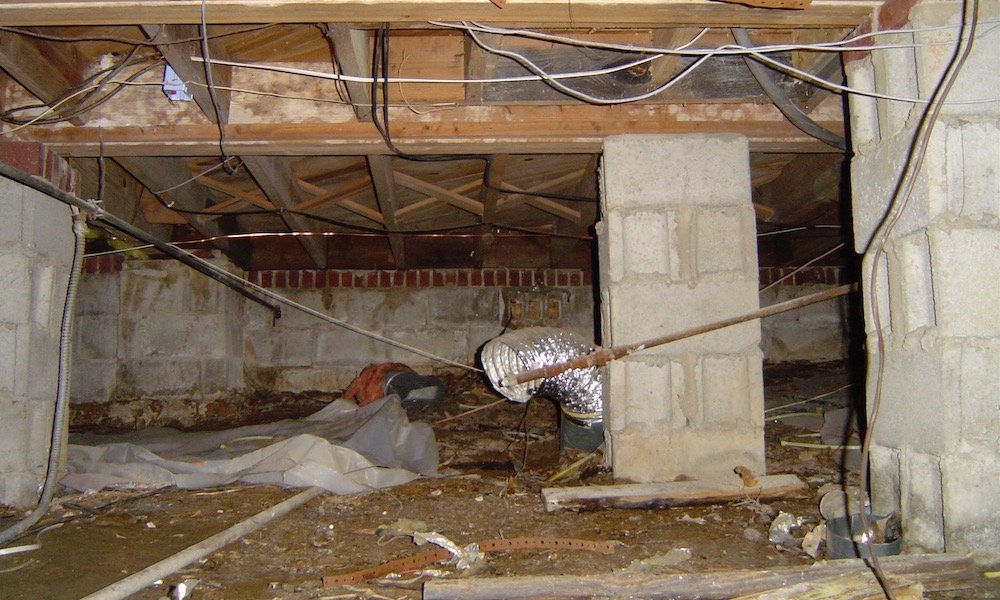
Bare soil, or an old torn plastic sheet over it, lets moisture rise into the crawl space all year. That moisture soaks into insulation, condenses on cold surfaces, feeds mould and rot, and drifts up into the house as that familiar musty smell. A sealed vapour barrier is the foundation of every crawl space insulation job we do — it's what lets the insulation stay dry and keep working.
Signs Your Crawl Space Needs a Proper Vapour Barrier
These are the conditions we see most often in Edmonton-area and lake-country crawl spaces:
- Bare soil, or thin plastic that’s torn, bunched up or missing in places
- Damp, sagging or mouldy insulation between the floor joists
- A musty smell in the house, especially on the main floor
- Condensation or frost on pipes, ducts or the rim joist in winter
- Wood that looks dark, stained or soft
How We Seal a Crawl Space
Inspection & Moisture Source
We check where the moisture is coming from. Vapour from the soil is handled with a barrier. Water actually coming in — pooling, seepage, spring melt — is a drainage problem and gets fixed first by our foundation crew.
Prep the Space
Old plastic, debris and failed insulation removed. Sharp rocks and obstacles cleared so the new barrier isn’t punctured.
Ground Vapour Barrier
Heavy polyethylene laid across the ground, lapped at the seams and sealed, and run up and fastened to the walls where the approach calls for it.
Seal and Insulate
Rim joists sealed and insulated, walls insulated where the space is being closed in, vents and the access hatch dealt with.
What to Expect After
Why Choose Homestead Insulation
Frequently Asked Questions
Get a Straight Answer About Your Insulation
Tell us what you're noticing — cold rooms, ice dams, frost in the attic, cold floors. We'll tell you what's actually going on.